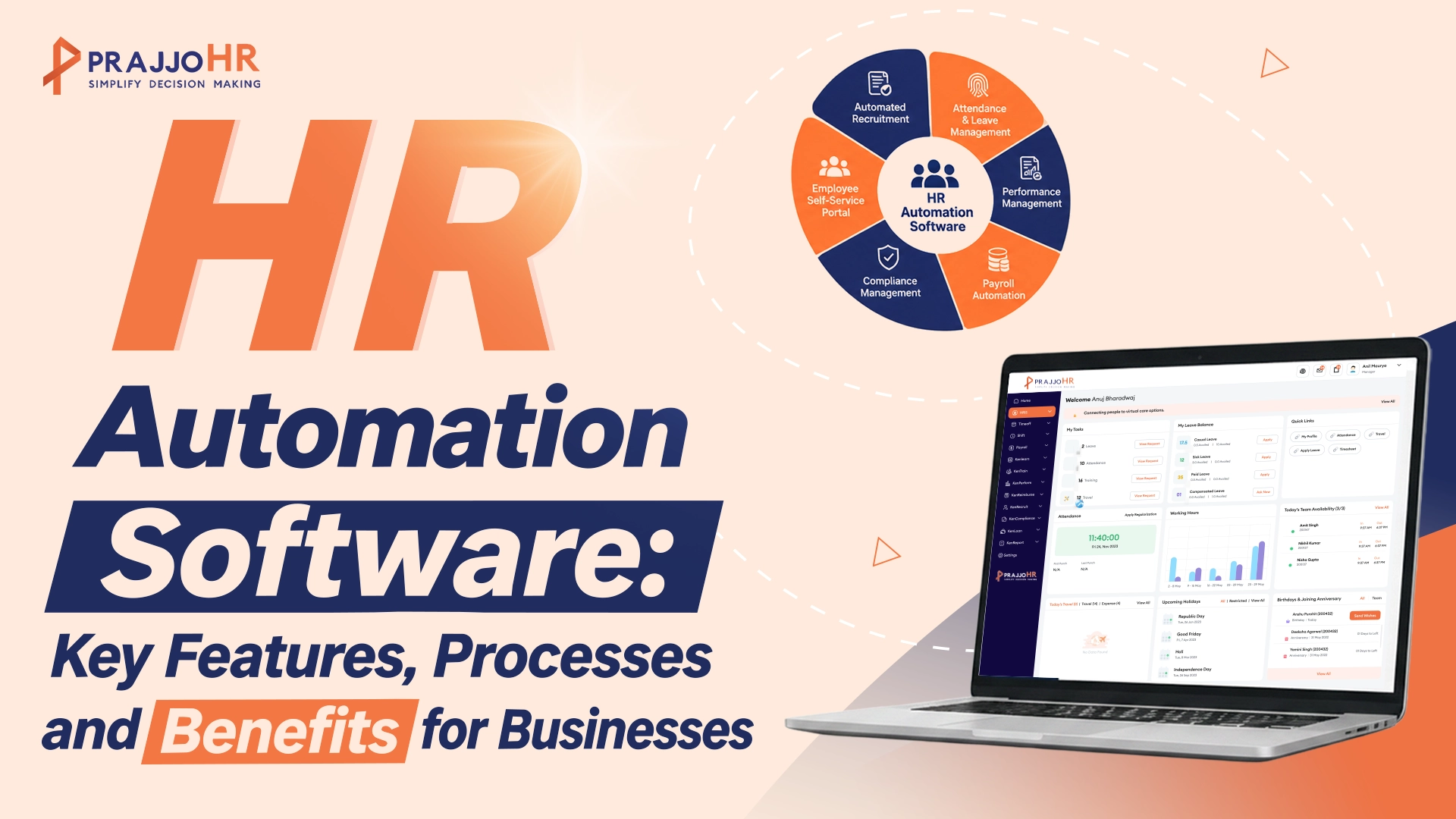
HR Automation Software: Key Features, Processes and Benefits for Businesses
Managing human resources involves more than maintaining employee records and processing salaries. HR teams handle recruitment, onboarding, attendance, payroll, leave requests and employee performance, often across different departments.
When these activities depend on manual work, they can consume valuable time and make it difficult to maintain accurate employee information. HR automation helps businesses organise these responsibilities through digital systems and structured workflows.
As businesses adopt modern HR technology, automation is becoming an important part of workforce management. It helps reduce repetitive administrative work, improve coordination and give HR teams more time to focus on people and business priorities.
What Is HR Automation?
HR automation is the use of digital tools and software to manage routine human resource activities with less manual effort. It allows businesses to handle processes such as employee data management, recruitment, payroll, attendance, leave and performance reviews through organised digital workflows.
Instead of maintaining separate spreadsheets, physical records and email conversations, HR teams can use an integrated HR management system to manage employee-related information in one place. This makes everyday HR activities easier to track, update and manage.
Why Is HR Automation Becoming Important for Businesses?
As organisations grow, their HR responsibilities also increase. Managing employee information, processing salaries, tracking attendance and coordinating recruitment can become difficult when every activity depends on manual work.
HR automation helps businesses handle these responsibilities more systematically. Some important reasons behind its growing adoption include:
- Growing Employee Data: Businesses need organised systems to maintain employee records, documents and employment information.
- Faster HR Operations: Digital workflows help reduce delays in routine activities and approval processes.
- Improved Data Accuracy: Automated calculations and structured records help reduce errors caused by repeated manual entries.
- Better Employee Experience: Employees can access HR services and submit requests through digital platforms.
- Changing HR Technology: AI-powered tools and HR automation software are creating new ways to manage recruitment, employee information and workforce activities.
10 HR Processes That Businesses Can Automate
HR automation is not limited to one department or activity. It can support different stages of the employee lifecycle, from hiring a candidate to managing their performance and maintaining employment records.
Here are ten important HR processes that businesses can automate.
1. Core HR and Employee Data Management
Maintaining accurate employee information is one of the basic responsibilities of an HR department. Core HR software helps businesses organise employee profiles, personal details, employment history and important documents through a centralised system.
Important capabilities include:
- Employee profile and document management.
- Department, designation and reporting hierarchy management.
- Employee information updates.
- Role-based access and employee records.
- Centralised workforce information.
This helps HR teams maintain consistent employee records without depending on multiple spreadsheets.
2. Attendance and Leave Management
Attendance and leave management are closely connected because both affect employee working hours and payroll calculations. An automated system helps businesses track attendance, manage shifts and process leave requests through structured workflows.
Important capabilities include:
- Daily attendance tracking through biometric, web and mobile methods.
- Multiple shifts and rotational shift management.
- Late arrival, early exit, half-day and overtime tracking.
- Holiday, weekly-off and attendance regularisation management.
- Leave applications, approvals and balance tracking.
- Automatic syncing of approved leave with attendance and payroll records.
This helps businesses maintain accurate working-hour information and reduces manual attendance-related work.
3. Automated Payroll Management
Payroll processing involves salary calculations, allowances, deductions, reimbursements and statutory requirements. Payroll automation helps HR teams manage these activities through defined salary structures and organised processing workflows.
Important capabilities include:
- Flexible and grade-based salary structures.
- Multiple employee pay groups and payroll cycles.
- Maker-Checker payroll processing, where one authorised person prepares payroll and another reviews and approves it.
- Attendance-linked salary calculations.
- Arrears and salary adjustment management.
- Full and Final (F&F) settlements.
- PF, ESIC, PT and TDS compliance reports.
These features help businesses maintain better control over salary processing and reduce repetitive calculations.
4. Recruitment and Digital Onboarding
Recruitment and onboarding involve several activities, including manpower planning, candidate screening, interview coordination, offer management and joining formalities. Recruitment management software and employee onboarding software help HR teams organise these activities from candidate selection to employee joining.
Important capabilities include:
- Manpower requisition and hiring approval workflows.
- Job posting and careers page management.
- Candidate sourcing and referral management.
- Applicant Tracking System (ATS) for monitoring candidate stages.
- AI-powered resume screening and CV fitment scoring.
- Interview scheduling, candidate evaluation and digital offer letters.
- Digital document collection, verification and onboarding checklists.
- Employee profile creation and transfer of onboarding information to Core HR.
A structured process helps recruiters manage candidates efficiently and gives new employees a more organised joining experience.
5. Employee Self-Service Portal
An Employee Self-Service (ESS) portal allows employees to access important HR information and complete supported activities without depending on HR teams for every request.
Important capabilities include:
- Viewing and updating personal information.
- Accessing employee documents and salary slips.
- Submitting leave applications.
- Checking attendance and leave balances.
- Raising requests through approval workflows.
- Accessing relevant employment information.
This improves transparency and reduces the number of routine queries handled by HR teams.
6. Performance Management System
Employee performance management helps organisations evaluate employee contributions and align individual goals with business objectives. A performance management system provides structured processes for setting goals, conducting appraisals and reviewing employee development.
Important capabilities include:
- Goal setting and KRA management.
- Department-wise and role-based goal alignment.
- Self-assessments and manager appraisals.
- Competency assessments and performance ratings.
- Multi-level review and approval workflows.
- Rating calibration and Bell Curve normalisation.
- 360-degree feedback and 9-Box Matrix.
- Performance analytics and annual increment insights.
These capabilities help organisations conduct more structured performance reviews and make informed talent decisions.
7. Employee Engagement
Employee engagement focuses on building a positive workplace experience and maintaining employee involvement in organisational activities. Digital employee engagement tools can help businesses collect feedback, encourage participation and improve communication.
Important capabilities may include:
- Employee feedback and surveys.
- Employee recognition activities.
- Internal communication.
- Employee participation initiatives.
- Engagement-related insights.
These activities help HR teams understand employee expectations and identify opportunities to improve workplace engagement.
8. HR Reporting and Workforce Analytics
HR teams need reliable information to understand workforce activities and support business decisions. HR reporting and analytics tools help organise employee data and present important information through reports and dashboards.
Important capabilities include:
- Employee headcount and workforce reports.
- Attendance and leave reports.
- Payroll and salary reports.
- Department-wise employee information.
- Attrition and workforce trend analysis.
- Performance-related reports and insights.
This helps management make workforce decisions using organised employee information rather than assumptions.
9. Employee Document Management
Managing employee documents is another regular HR responsibility. From joining documents to employment records and important certificates, businesses need a structured way to maintain and access employee information.
Important capabilities include:
- Digital employee document storage.
- Document submission and verification.
- Employee document access.
- Organised employment records.
- Secure access based on assigned permissions.
Digital document management reduces dependence on physical files and makes employee information easier to maintain.
10. HR Workflow and Approval Management
Many HR activities require approvals from managers, department heads or authorised personnel. Managing these approvals through separate emails and messages can make it difficult to track request status.
HR workflow automation helps businesses organise these activities through predefined approval processes.
Important capabilities include:
- Leave and attendance approval workflows.
- Manpower requisition approvals.
- Payroll Maker-Checker approvals.
- Employee request management.
- Multi-level approval processes.
- Request status tracking and notifications.
This creates a more organised way to manage employee requests and departmental responsibilities.
Key Benefits of HR Automation for Businesses
Implementing HR automation software can improve the way businesses manage everyday employee-related activities. Some important benefits include:
- Saves Administrative Time: Automating repetitive tasks allows HR teams to spend less time on manual entries, calculations and follow-ups.
- Reduces Manual Errors: Structured workflows and automated calculations help maintain more accurate employee and payroll records.
- Improves Employee Experience: Employees can access relevant HR information, submit requests and track activities through digital platforms.
- Maintains Centralised Records: Businesses can organise employee information, documents and workforce records in one system.
- Improves Approval Management: Digital approval workflows help managers review requests and maintain better visibility.
- Supports Better Decisions: HR reports and workforce analytics provide useful information for understanding employee activities and business requirements.
- Supports Business Growth: An integrated HRMS can help organisations manage increasing employee numbers and changing HR requirements.
How Prajjo HR Helps Businesses Manage HR Operations
Managing different HR activities through separate tools can create additional work for HR teams. Businesses need a system that brings essential HR functions together and helps maintain employee information throughout the employee lifecycle.
Prajjo HR offers an integrated HRMS platform with 54+ modules , covering essential HR activities, including core HR, payroll, attendance, leave, recruitment, onboarding, performance management and employee engagement.
Here is how its important modules support everyday HR operations:
- Core HR: Maintain centralised employee profiles, personal information, employment history, documents, departments, designations and reporting hierarchies with role-based access.
- Attendance and Leave Management: Manage biometric, web and mobile attendance, face recognition, geo-fenced attendance, rotational shifts, overtime, late marks, early exits, attendance regularisation, leave applications, approvals and automatic leave-attendance syncing.
- Payroll Management: Use the payroll management system to configure flexible salary structures, grade and location-based compensation, multiple pay groups and payroll cycles. Manage Maker-Checker approvals, arrears, salary adjustments, F&F settlements and statutory reports for PF, ESIC, PT and TDS.
- Recruitment Management: Manage manpower requisitions, hiring approvals, job postings, candidate sourcing, referrals and applicant tracking. AI-enabled resume parsing and CV Fitment Scoring help recruiters identify relevant candidates and manage hiring stages.
- Employee Onboarding: Manage digital onboarding workflows, joining checklists, induction planning, buddy or SPOC assignments, document collection, PAN verification and employee communication. Selected candidates can be converted into employee records and connected with Core HR and Payroll.
- Performance Management: Manage performance plans, goal cascading, KRAs, self-assessments, manager appraisals, competency evaluations, multi-level reviews, rating calibration, Bell Curve normalisation, 360-degree feedback and 9-Box Matrix.
- Employee Engagement: Support employee engagement activities that encourage participation, feedback and better communication within the organisation.
- Employee Self-Service: Give employees access to relevant HR information and supported self-service activities, reducing dependence on HR teams for routine requests.
- HR Reports and Analytics: Access organised employee, attendance, payroll and performance information to understand workforce activities and support business decisions.
With these capabilities, Prajjo HR helps organisations manage different HR responsibilities through an integrated platform rather than relying on disconnected tools and manual processes
Conclusion
HR automation is changing how businesses manage their workforce. From maintaining employee records and processing payroll to managing recruitment and performance reviews, digital systems help organise activities that traditionally required considerable manual effort.
However, choosing the right HR automation software is equally important. Businesses should look for a platform that covers their essential HR requirements, supports their existing workflows and can grow with their organisation.
With 54+ modules covering different HR functions, Prajjo HR provides businesses with an integrated platform to manage employee-related activities more systematically.
If you are looking to improve your HR operations, explore Prajjo HR and schedule a demo to understand how its HRMS solutions can support your business
Frequently Asked Questions (FAQs)
1. What is HR automation?
HR automation is the use of software and digital tools to manage routine HR activities such as employee data management, payroll, attendance, leave, recruitment and performance reviews with less manual effort.
2. What are the most common examples of HR automation?
Common examples include automated payroll processing, digital attendance tracking, leave approval workflows, candidate tracking, employee onboarding and performance appraisal management.
3. What is HR automation software?
HR automation software is a digital platform that helps businesses manage different human resource activities through organised workflows. It may include employee management, payroll, attendance, leave, recruitment and performance management modules.
4. How does HR automation benefit employees?
HR automation allows employees to access relevant HR information, check attendance, view salary slips, submit leave requests and use available self-service features. It makes everyday HR activities more convenient and organised.
5. Is HR automation suitable for small businesses?
Yes. Small businesses can use HR automation to manage employee records, payroll, attendance and leave requests more efficiently. It also helps establish structured HR processes as the organisation grows.
Experience Next-Generation
HR Software in Action
People-Centric HRMS: AI That Aligns Mission, People & Performance