Manpower Planning & Budgeting for Smarter Workforce Decisions
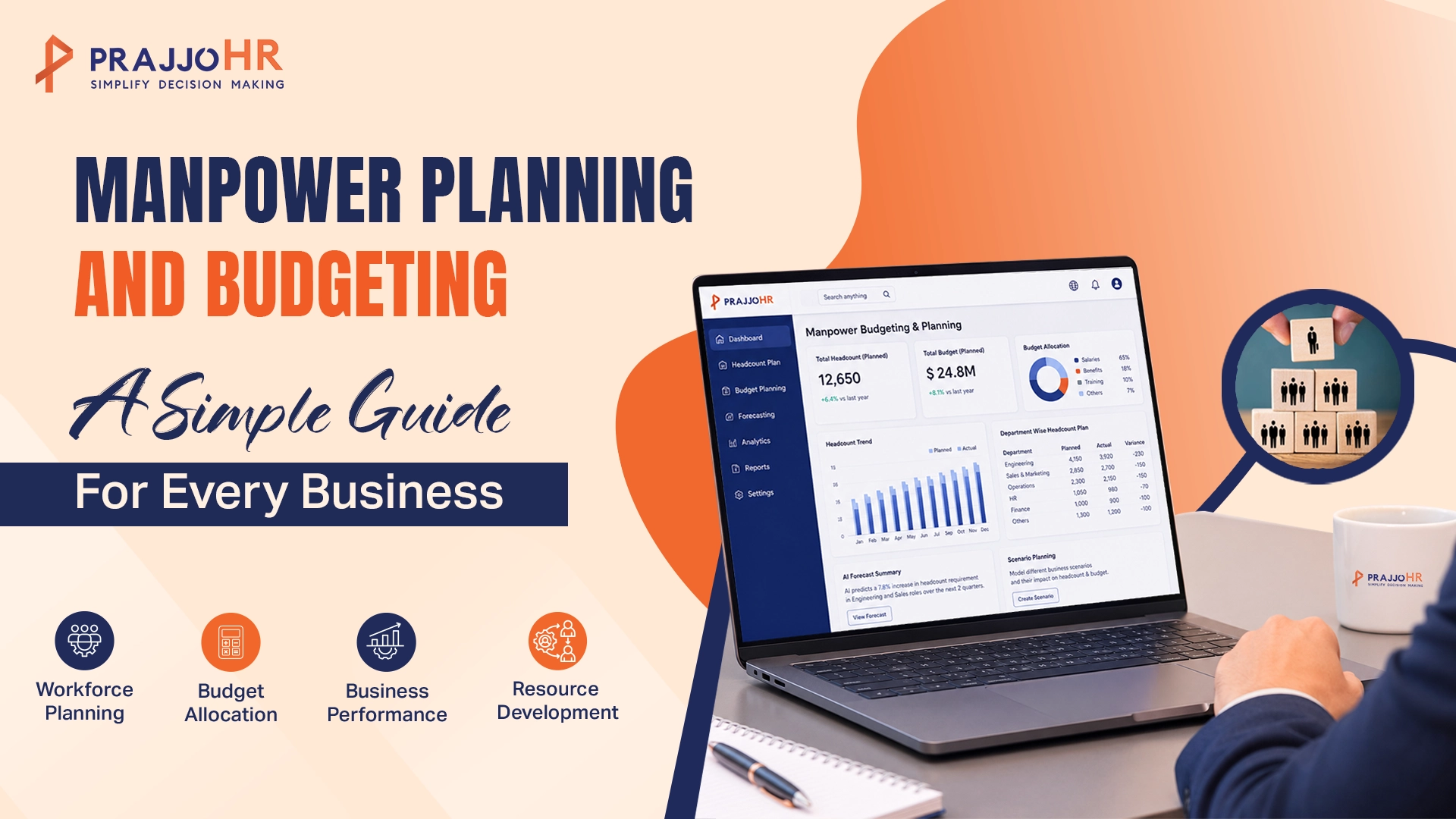
Every business, whether it’s a startup or a large enterprise, faces one common challenge: managing people efficiently while keeping costs under control. Questions like “How many employees do we need this year?”, “Can we afford new hiring?”, or “What happens if key employees leave?” are part of everyday business planning.
This is where manpower planning and budgeting become important. It helps organizations understand their workforce requirements, estimate employee-related costs, and prepare for future business needs without unnecessary confusion or last-minute decisions
In this blog, we will understand the concept of manpower planning and budgeting, why it matters, the common challenges businesses face, and how PrajjoHR helps organizations make smarter workforce decisions.
What Is Manpower Budgeting & Planning?
Let’s understand this with a simple example. Imagine you are running a restaurant. Before the month starts, you need to decide how many chefs, servers, and cleaners you’ll need and whether your business can afford to pay them. That is manpower planning and budgeting in its simplest form.
For every business, it mainly comes down to two important questions:
How many employees do we need, and what skills should they have?
This is manpower planning, making sure the business is neither understaffed nor overstaffed.
How much will it cost?
This is manpower budgeting, which includes salaries, hiring costs, training, bonuses, and other employee-related expenses.
Think of it like building a cricket team. You need the right mix of players, not too many and not too few, while also managing the budget properly.
Why Does Manpower Planning Matter?
Workplaces have changed a lot in recent years. Businesses can no longer depend only on guesswork or spreadsheets when it comes to workforce planning.
1. Jobs Are Changing Quickly
Technology and AI are changing the way businesses work. Some job roles are disappearing while new skills are becoming more important. Companies need proper planning to hire the right talent.
2. Remote and Hybrid Work Is Growing
Employees now work from different locations and even different countries. Businesses need better planning for salaries, work management, and workforce distribution.
3. Employee Costs Are High
For many organizations, employee-related expenses form a major part of the total business cost. Even small improvements in workforce planning can help businesses save money.
4. Employee Turnover Is Increasing
Employees switch jobs more frequently today. Without proper planning, businesses may struggle to fill important roles quickly.
5. Compliance Costs Keep Changing
PF, ESI, gratuity, and other labour law requirements change regularly. Businesses need to include these costs while planning their workforce budget.
The 5 Core Pillars of Strategic Workforce Planning
A strong manpower plan is never created by chance. It is built on a few important pillars that help businesses manage their workforce in a smarter and more organized way. If one part is missing, the entire planning process can become unstable.
1. Understanding Business Needs
The first step is understanding where the business is heading. If a company plans to expand, launch new services, or enter new markets, it will need additional employees and different skill sets. Workforce planning should always align with business goals.
2. Knowing Your Existing Workforce
Before hiring externally, businesses should first evaluate their current workforce. Understanding employee skills, performance levels, strengths, and potential attrition helps organizations make better workforce decisions.
3. Spotting the Gaps
Businesses need to compare what they currently have with what they will need in the future. For example, a company may require 10 developers but currently have only 6. Identifying these gaps early provides enough time for hiring or employee training.
4. Calculating the Real Workforce Cost
Employee expenses go beyond salaries. Businesses also need to consider bonuses, PF contributions, insurance, training costs, equipment expenses, and recruitment costs. A proper manpower budget gives a complete picture of workforce spending.
5. Preparing for Unexpected Situations
Business conditions can change quickly. Companies may face sudden expansion, project-based hiring needs, or economic slowdowns. Strategic workforce planning helps organizations stay prepared and respond without making rushed decisions.
Simple truth: Businesses that plan their workforce as carefully as their finances are usually more prepared, more productive, and better at retaining employees.
How to Build a Manpower Budget?
Here’s a simple process any business can follow, whether you have 20 employees or 20,000. PrajjoHR helps simplify and automate most of these workforce planning activities.
1. Start with Your Business Goals
What does your company want to achieve this year? Your hiring plan should always align with your business goals, not the other way around.
2. Take Stock of Your Current Team
Review your current workforce, including employee roles, salaries, skills, and experience. PrajjoHR helps businesses manage all this information through one centralized dashboard.
3. Predict Who Might Leave
Look at previous attrition trends and identify which departments or roles experience the highest turnover. Knowing this early helps businesses plan ahead instead of reacting later.
4. Decide How Many New People You Need
Based on your goals and expected departures, figure out exactly how many employees need to be hired, which departments require support, what roles need to be filled, and when the hiring should happen. Proper planning helps businesses avoid last-minute hiring pressure and workforce gaps.
5. Calculate the Full Cost of Each Hire
Add PF, ESI, medical insurance, bonuses, training, equipment, and recruiting costs. The real cost of a hire is usually 1.3–1.5× the salary.
6. Get Leadership to Approve the Plan
Share your workforce plan with management and prepare multiple hiring scenarios based on expected business growth and budget requirements.
7. Review It Every Month
A manpower budget is only effective when reviewed regularly. Monthly reviews help businesses stay on track and make quick adjustments whenever required.
Common Mistakes Businesses Make
Mistake 1: Relying on Spreadsheets
Many businesses still depend heavily on spreadsheets for workforce planning and budgeting. But spreadsheets can easily create problems such as formula errors, duplicate versions, and missing data. Even a small mistake can lead to costly workforce decisions.
The Fix: Use a proper HR platform that keeps all workforce data connected, updated, and accurate in real time.
Mistake 2: HR and Finance Working Separately
HR teams focus on hiring and headcount, while finance teams focus on budgets and expenses. When both teams work separately, manpower planning becomes inaccurate and disconnected.
The Fix: Use a system where HR and financial data stay synchronized for better workforce planning and budgeting.
Mistake 3: Hiring Only After Someone Resigns
Many businesses begin hiring only after an employee leaves. By the time recruitment, selection, and onboarding are completed, valuable time is already lost, affecting productivity.
The Fix: Use workforce planning tools that help predict attrition and prepare hiring plans in advance.
Mistake 4: Ignoring Compliance Costs
Some companies calculate only employee salaries while preparing manpower budgets and forget additional costs like PF, ESI, gratuity, bonuses, and statutory expenses. This often creates unexpected financial pressure later.
The Fix: Use payroll software that automatically calculates compliance-related expenses from the beginning.
Solution
PrajjoHR helps businesses solve all these workforce planning challenges through one integrated platform, helping organizations reduce manual errors, improve workforce visibility, and make smarter manpower decisions.
Why PrajjoHR Plays in a League of Its Own
Most HR tools handle the basics like attendance, payroll, and leave tracking. PrajjoHR does all of that too, but it goes much further. Trusted by more than 150,000 users across multiple countries, PrajjoHR helps businesses manage workforce planning, employee management, and HR operations through one connected platform.
1. It Thinks Beyond Day-to-Day
Succession planning, leadership pipeline management, and retention tracking are built into the platform instead of being offered as expensive add-ons.
2. employee-monitoring-software Tells You What’s Next
More than just basic reports, employee-monitoring-software employee-monitoring-software helps businesses identify disengagement signals, track workforce trends, and benchmark hiring costs with industry standards.
3. From Hiring to Exit, Connected
Every stage of the employee lifecycle is managed in one place, from recruitment and onboarding to payroll and exit management, without switching between multiple systems.
4. Payroll & Budget Work Together
Businesses can instantly view the complete workforce cost, including salary, PF, ESI, gratuity, bonuses, and other employee-related expenses.
5. From 30 to 30,000 Employees
Whether it’s a startup or a large enterprise, PrajjoHR is designed to scale according to business requirements without the need to change systems later.
6. Prajjo-Connect for Field Teams
Sales teams, delivery staff, and field employees can track attendance, location, expenses, and performance in real time through Prajjo-Connect.
Prajjo HR vs. Others: See the Difference
| Feature | Typical HR Software | PrajjoHR |
|---|---|---|
| Basic HR & Payroll | Available | AI-automated with full compliance (Maker Checker functionality) |
| Succession & Talent Planning | Costly add-on | Included and connected with position management |
| Live Workforce Cost View | Manual spreadsheets | Real-time dashboards with live updates |
| Skills Gap Analysis | Manual or missing | Automated with competency mappin |
| Field Employee Tracking | Not included | Available through Prajjo-Connect |
| Multiple Languages | English only | Built-in multilingual support |
| Voice Assistant | Not available | AI-integrated Voice Bot feature |
| Security Certifications | Varies widely | ISO 27001, SOC 1 & SOC 2 certified |
| Finance / ERP Integration | Basic connections | Industry-leading integration capabilities |
| Works for All Business Sizes | Sometimes | Suitable for startups to large enterprises |
| Innovation Score | 4–6 / 10 | 9.0 / 10 – Among the highest in the market |
Conclusion
Manpower budgeting and planning isn’t a luxury reserved for large corporations. It’s a business necessity, and in 2026, it can be the difference between companies that are always reacting and companies that are always prepared.
When you know how many people you need, what they’ll cost, and where your talent gaps are, you stop firefighting and start building strategically. You hire with confidence, manage budgets wisely, and reduce the risk of losing valuable talent.
The good news? You don’t need endless spreadsheets or a team of analysts to make it happen. PrajjoHR brings everything together in one intelligent platform, offering real-time visibility, predictive insights, and the confidence to make smarter workforce decisions every day.
Whether you’re a 50-person startup or a 50,000-person enterprise, the right workforce plan starts here.
Ready to optimize your workforce planning? Schedule a Free Demo Today and explore how PrajjoHR can simplify manpower budgeting, improve hiring decisions, and support smarter business growth.
FAQ’s
1. What is the difference between manpower planning and manpower budgeting?
Manpower planning focuses on workforce needs and required skills, while manpower budgeting focuses on calculating employee-related costs like salaries, hiring, and compliance expenses.
2. How often should businesses review their manpower budget?
Businesses should review manpower budgets every month to track workforce costs, hiring progress, and changing business requirements.
3. Is manpower planning important for small businesses?
Yes. Proper workforce planning helps small businesses avoid hiring mistakes, control costs, and stay prepared for future growth.
4. What costs should be included in a manpower budget?
A manpower budget should include salaries, PF, ESI, bonuses, insurance, recruitment, training, and other employee-related expenses.
5. How does PrajjoHR help with workforce planning?
PrajjoHR helps businesses with workforce budgeting, payroll integration, compliance management, attrition tracking, and real-time workforce insights.
Experience Next-Generation
HR Software in Action
People-Centric HRMS: AI That Aligns Mission, People & Performance