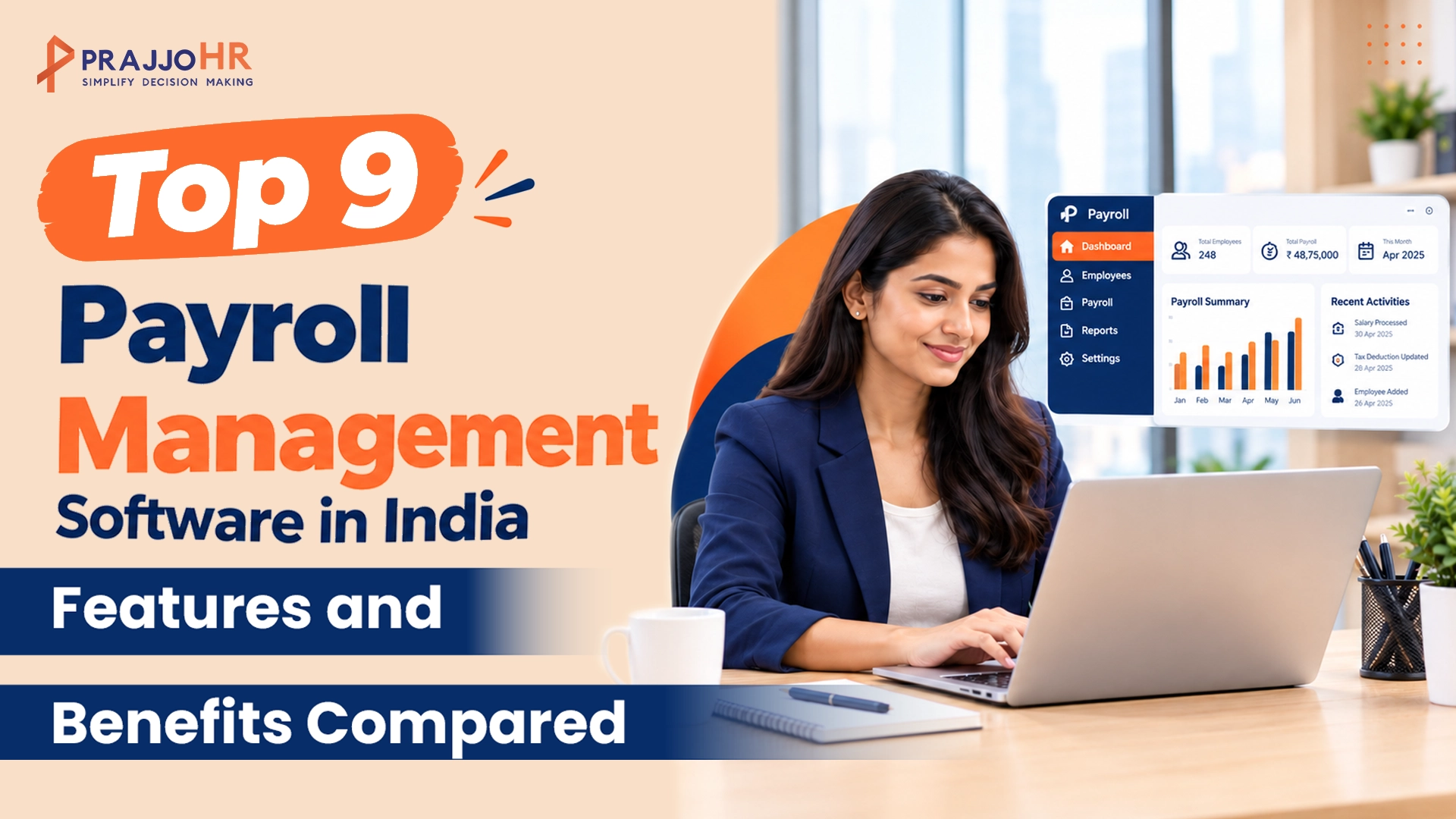
Top 9 Payroll Management Software in India: Features and Benefits Compared
Choosing the right payroll management software is important for every business that wants to pay employees correctly and on time. Managing salaries through spreadsheets can become difficult as a company grows. HR teams must calculate salaries, check attendance, manage deductions, prepare payslips, and maintain payroll records. Even a small mistake can lead to employee complaints and extra work.
This is where payroll software becomes useful. It helps businesses automate salary calculations, reduce manual work, maintain records, and improve payroll accuracy. The right system can also connect payroll with attendance management, recruitment, and other HR activities.
There are several payroll solutions available in India, including Prajjo HR, greytHR, Zoho Payroll, Keka, and HROne. Each payroll solution comes with its own set of features to suit different business requirements.
In this guide, we will explore the top 9 payroll management software in India, explain their key features, and help you understand how to choose the right solution for your business.
What Is Payroll Management Software?
Payroll management software helps businesses handle employee salaries, calculate deductions, and keep track of payments without relying on manual work. It uses information such as salary structure, attendance, leave, allowances, and deductions to help HR teams prepare payroll.
For example, if an employee takes unpaid leave during a month, the payroll system can use the relevant attendance and salary rules to calculate the payable amount.
Modern payroll software can also help businesses maintain tax records, generate payslips, manage salary revisions, and prepare statutory reports.
The main purpose of payroll management software is to make salary processing more accurate, organised, and less time-consuming.
Key Features of Payroll Management Software
Businesses should first look at the features that can make payroll easier to manage and save their HR team time.
1. Automated Salary Calculation
Payroll automation helps calculate employee salaries based on their salary structure, working days, allowances, and applicable deductions. It reduces repetitive calculations and helps HR teams prepare payroll more efficiently.
2. Attendance and Leave Integration
A payroll management system can use attendance and leave information to calculate payable days. This is especially useful for companies with different shifts, work schedules, and leave policies.
3. Tax and Statutory Compliance
Businesses in India must follow the payroll rules and regulations that apply to them. Depending on the organisation and employee, these may include Provident Fund (PF), Employees' State Insurance (ESI), Professional Tax (PT), and Tax Deducted at Source (TDS).
Payroll software helps businesses keep up with salary calculations, deductions, and other payroll requirements under Indian rules and regulations. However, businesses should verify the system's configuration and keep it updated according to applicable regulations.
4. Payslip Generation
Employees should be able to access their salary slips without repeatedly contacting HR. Payroll software can generate payslips showing earnings, deductions, and net salary.
5. Salary Structure Management
Companies may have different salary structures based on employee grades, roles, departments, or locations. A payroll system should support these differences and help HR teams maintain consistent records.
6. Full and Final Settlement
When an employee leaves a company, HR must calculate pending salary, applicable deductions, and other payable amounts. Full and final settlement features help organise this process.
7. Payroll Reports and Analytics
Payroll reports help HR and finance teams review salary expenses, deductions, reimbursements, and historical payroll information. These reports support better planning and financial control.
8. Employee Self-Service
An employee self-service portal allows employees to access payslips, salary information, and other available documents through web or mobile access. This reduces routine requests to the HR team.
9. Maker-Checker Approval
A maker-checker process allows one authorised person to prepare or update payroll information while another authorised person reviews and approves it. This adds an extra layer of control, helps identify mistakes before final processing, and supports better payroll governance.
Top 9 Payroll Management Software in India
1. Prajjo HR - Best Payroll Management Software in India
Prajjo HR is an integrated HR and payroll solution that helps businesses manage salary processing and employee-related activities through a centralised platform. It supports payroll workflows, salary structure management, and payroll reporting, along with broader HR capabilities.
What Makes Prajjo HR a Strong Payroll Solution?
Prajjo HR is a useful option for businesses that want to manage payroll and other HR tasks through one platform. Its integrated approach helps organisations manage payroll while connecting employee records, attendance, recruitment, and other HR activities. This makes it worth considering for companies that want to reduce manual work and bring more HR processes together in one platform.
Key features of Prajjo HR:
- Flexible Salary Structures: Configure salary structures according to employee grades, roles, and locations.
- Multiple Pay Groups: Manage monthly and custom payroll cycles to meet different employee payment schedules and business requirements.
- Maker-Checker Approval: Allow one authorised person to prepare payroll information and another to review and approve it, adding an extra layer of control before payroll is finalised.
- Automated Salary Processing: Manage payroll calculations based on configured salary structures, payable days, and applicable deductions.
- Payroll Compliance Reports: Access reports related to PF, ESIC, PT, TDS, and other applicable payroll records.
- Payslip Management: Generate payslips and provide employees with web and mobile access to salary information.
- Employee Self-Service: Let employees check their payslips and payroll details on their own, without having to contact HR every time.
- Arrears and Full and Final Settlement: Manage salary adjustments, pending payments, and employee exit settlements in a more organised way.
- Payroll Reporting: Maintain payroll history and export reports for review and auditing.
Prajjo HR helps businesses handle payroll and everyday HR tasks in one place, with less manual effort and better-organised employee records. Its flexible payroll workflows support smoother salary processing and better coordination across HR operations.
Best For: Small to large enterprises looking for an end-to-end HR and payroll solution on one platform. Ideal for businesses that need payroll automation, flexible salary structures, multiple pay groups, and compliance reporting. Suitable for growing organisations that want to connect payroll with recruitment, attendance, employee management, and HR analytics.
2. greytHR
greytHR helps businesses handle employee salaries, payslips, and day-to-day HR tasks. It brings payroll and employee management features together in one platform.
Key features:
- Salary processing and payslip generation
- Payroll-related statutory reports
- Attendance and leave management
- Employee self-service
- Payroll records and reporting
- Expense and reimbursement management
- Employee document management
Best For: Startups and SMEs looking for cost-effective payroll processing, compliance support, and basic HR management.
3. Zoho Payroll
Zoho Payroll helps businesses calculate employee salaries, manage deductions, and handle everyday payroll tasks more easily. It can be a useful option for companies that already use other applications in the Zoho ecosystem.
Key features:
- Salary calculations and payroll processing
- Payslip generation
- Tax and statutory payroll workflows
- Employee self-service
- Integration with supported Zoho applications
- Salary structure and deduction management
- Payroll reports and records
Best For: Small and medium-sized businesses using Zoho applications and looking for connected payroll and business workflows.
4. Keka
Keka provides HR and payroll capabilities for businesses that want to manage employee information and salary processing through an integrated platform. It can help organisations coordinate payroll with other workforce activities.
Key features:
- Payroll processing and salary structures
- Attendance and leave management
- Employee information management
- Performance management capabilities
- Payroll reports and employee access features
- Employee onboarding workflows
- HR analytics and reporting
Best For: Growing businesses and mid-sized companies managing payroll, employee performance, and HR operations on one platform.
5. SalaryBox
SalaryBox is a staff management platform that helps businesses manage payroll, attendance, and employee operations. It supports automated salary processing, compliance workflows, and digital payslips.
Key Features:
- Automated payroll processing
- Salary structure management
- Attendance and leave integration
- Overtime calculation
- Statutory compliance support
- Digital payslip generation
- Salary reports and employee self-service
Best For: Startups and small to medium-sized businesses looking to manage payroll, attendance, and salary payments through one platform.
6. Pocket HRMS
Pocket HRMS combines payroll with broader human resource management capabilities. It is an option for businesses looking to manage employee information and salary processing within one HR platform.
Key features:
- Payroll processing
- Employee information management
- Attendance and leave management
- Payslips and payroll records
- Employee self-service features
- Recruitment and onboarding capabilities
- HR reports and workforce information
Best For: Small and medium-sized businesses looking for payroll automation and employee management through an integrated HRMS.
7. HROne
HROne offers HR management capabilities that include payroll-related functions. It can be considered by organisations looking to coordinate salary administration with other HR activities.
Key features:
- Payroll and salary administration
- Employee data management
- Attendance and leave workflows
- HR reporting
- Employee self-service features
- Recruitment management
- Employee lifecycle management
Best For: Mid-sized businesses and large enterprises managing payroll, recruitment, and employee processes on one platform.
8. factoHR
factoHR provides HR and workforce management capabilities, including payroll-related functions. It can be useful for organisations that need to coordinate employee attendance and salary processing.
Key features:
- Payroll processing
- Attendance and leave management
- Employee information management
- Payroll reports
- Employee self-service capabilities
- Workforce management features
- Employee onboarding and HR workflows
Best For: SMEs and growing businesses looking to connect payroll with attendance, leave, and workforce management.
9. Qandle
Qandle offers HR management capabilities that bring together employee administration and related workforce processes. Businesses can evaluate it for payroll and other HR requirements.
Key features:
- Payroll processing and salary management
- Attendance and leave management
- Recruitment management
- Employee self-service
- HR reporting and employee records
- Employee onboarding workflows
- Performance management capabilities
Best For: Startups and SMEs looking for an integrated HR and payroll platform to manage recruitment, attendance, and employee records.
How to Choose the Best Payroll Management Software in India
Every business has different payroll needs. Before selecting a platform, consider the following factors.
1. Understand Your Business Requirements
Start by identifying the number of employees, salary structures, payroll cycles, and locations you need to manage. A small company may need basic salary processing, while a larger organisation may require more detailed payroll workflows.
2. Check Indian Payroll Compliance Features
Confirm whether the software supports the statutory reports and calculations applicable to your organisation. Check how updates are handled when tax rules or other requirements change.
3. Look for Attendance Integration
If your business tracks working hours, shifts, or unpaid leave, attendance integration can help reduce manual payroll adjustments.
4. Review Employee Self-Service
Check whether employees can access payslips, salary details, and other necessary documents through web or mobile applications.
5. Compare Pricing and Implementation
Compare the complete cost, including the required modules, employee limits, implementation, support, and any additional charges. Do not choose software based on the starting price alone.
6. Check Reporting and Data Security
Payroll contains sensitive employee information. Review access controls, available security measures, data handling practices, and reporting capabilities before making a decision.
7. Consider Future HR Needs
If your business plans to expand, choose software that can support additional HR activities. An integrated HR management system can be useful when you need payroll, recruitment, onboarding, attendance, and performance management in one connected environment.
Benefits of Using Payroll Software for Your Business
Investing in the right payroll software can improve daily operations in several ways.
1. Less Manual Work
Automated calculations and structured workflows reduce repetitive tasks for HR and finance teams, allowing them to focus on other responsibilities.
2. Better Salary Accuracy
Using consistent employee records and payroll rules can reduce calculation errors. HR teams should still review payroll before final approval.
3. Timely Salary Processing
A structured payroll process helps teams prepare salaries within the planned payment schedule and reduces avoidable delays.
4. Improved Employee Experience
Employees can access payslips and available salary information without repeatedly requesting documents from HR.
5. Organised Records
Digital payroll history and reports make it easier to review previous salary cycles and prepare for audits.
6. Better HR Coordination
Payroll software connected with attendance management and other HR processes helps teams coordinate employee-related information.
7. Support for Business Growth
As the workforce grows, a suitable payroll management system can help manage additional employees and more complex salary structures.
Why Is Prajjo HR the Best Choice for Payroll Management?
The right payroll solution should do more than calculate salaries. It should help businesses manage employee information, maintain organised records, and connect payroll with other HR activities.
Prajjo HR is a strong choice for businesses looking for payroll management software and integrated HR capabilities in one platform.
1. Flexible Salary Structure Management
Different employees may have different salary structures based on their roles, grades, and locations. Prajjo HR supports salary structure assignment, grade- and location-based mapping, and pro-rata salary component setup to help HR teams organise compensation.
2. Multiple Payroll Processing Cycles
Businesses may have different payroll schedules or employee groups. Prajjo HR supports multiple payroll processing cycles and different pay groups, helping HR teams manage salary processing in a more structured way.
3. Payroll Compliance Reports
Payroll teams need accurate records for applicable deductions and statutory reporting. Prajjo HR provides payroll reports related to PF, ESIC, PT, TDS, salary records, reimbursements, and investments. Businesses should verify their statutory settings and filing obligations with their payroll or compliance team.
4. Easy Payslip Access
Prajjo HR supports payslip generation and web and mobile access to salary information. This helps employees access available payroll details without depending on HR for every request.
5. Arrears and Full and Final Settlement
Salary revisions and employee exits can create additional payroll work. Prajjo HR supports arrears processing, payroll adjustment tracking, payroll history, and full and final settlement management to help HR teams organise these activities.
6. Maker-Checker for Better Payroll Control
A maker-checker workflow separates the preparation of payroll information from its review and approval. Where supported and configured, this process adds an additional layer of checking and helps organisations identify potential errors before payroll is finalised.
7. Connected Recruitment and HR Management
Prajjo HR offers wider HR capabilities, including recruitment management, onboarding, attendance management, and performance management . Connecting these processes can help reduce repeated data entry and improve the flow of employee information.
For example, when a new employee joins through the recruitment and onboarding process, HR can maintain employee information in a more organised way for subsequent payroll activities. The exact workflow depends on the modules and integrations configured by the organisation.
8. A Solution for Growing Businesses
As a company grows, managing salaries, attendance, employee records, and other HR activities separately can become more difficult. Prajjo HR is worth considering for businesses that want to bring these activities together and build a more organised HR process.
Conclusion
Choosing the right payroll management software helps businesses automate salary processing, reduce manual work, and maintain organised employee records. The nine solutions covered in this guide offer different features to suit various business needs, so compare their capabilities, pricing, and integrations before making a decision.
Prajjo HR is a strong option for businesses seeking payroll automation alongside broader HR capabilities, including flexible salary structures, multiple payroll cycles, payroll reporting, and employee management.
The right solution should support your business as it grows and help your HR team manage payroll more efficiently. Features such as compliance reporting, payslip access, and integration with other HR functions can make daily operations smoother and improve workforce management.
Frequently Asked Questions (FAQs)
1. What is payroll management software?
Payroll management software helps businesses calculate employee salaries, manage deductions, generate payslips, and maintain payroll records.
2. What are the key features of payroll software?
Key features include automated salary calculations, attendance integration, tax and compliance reports, payslip generation, employee self-service, and payroll approval workflows.
3. What is the best payroll management software in India?
The best payroll software depends on your business size, budget, and requirements. Options include Prajjo HR, greytHR, Zoho Payroll, Keka, and other payroll solutions.
4. How does payroll management software benefit businesses?
It reduces manual work, helps minimise salary calculation errors, supports timely salary processing, and keeps payroll records organised.
5. Why should businesses choose Prajjo HR for payroll management?
Prajjo HR combines payroll automation, flexible salary structures, multiple pay groups, payroll reporting, and broader HR management capabilities in one platform.
Experience Next-Generation
HR Software in Action
People-Centric HRMS: AI That Aligns Mission, People & Performance