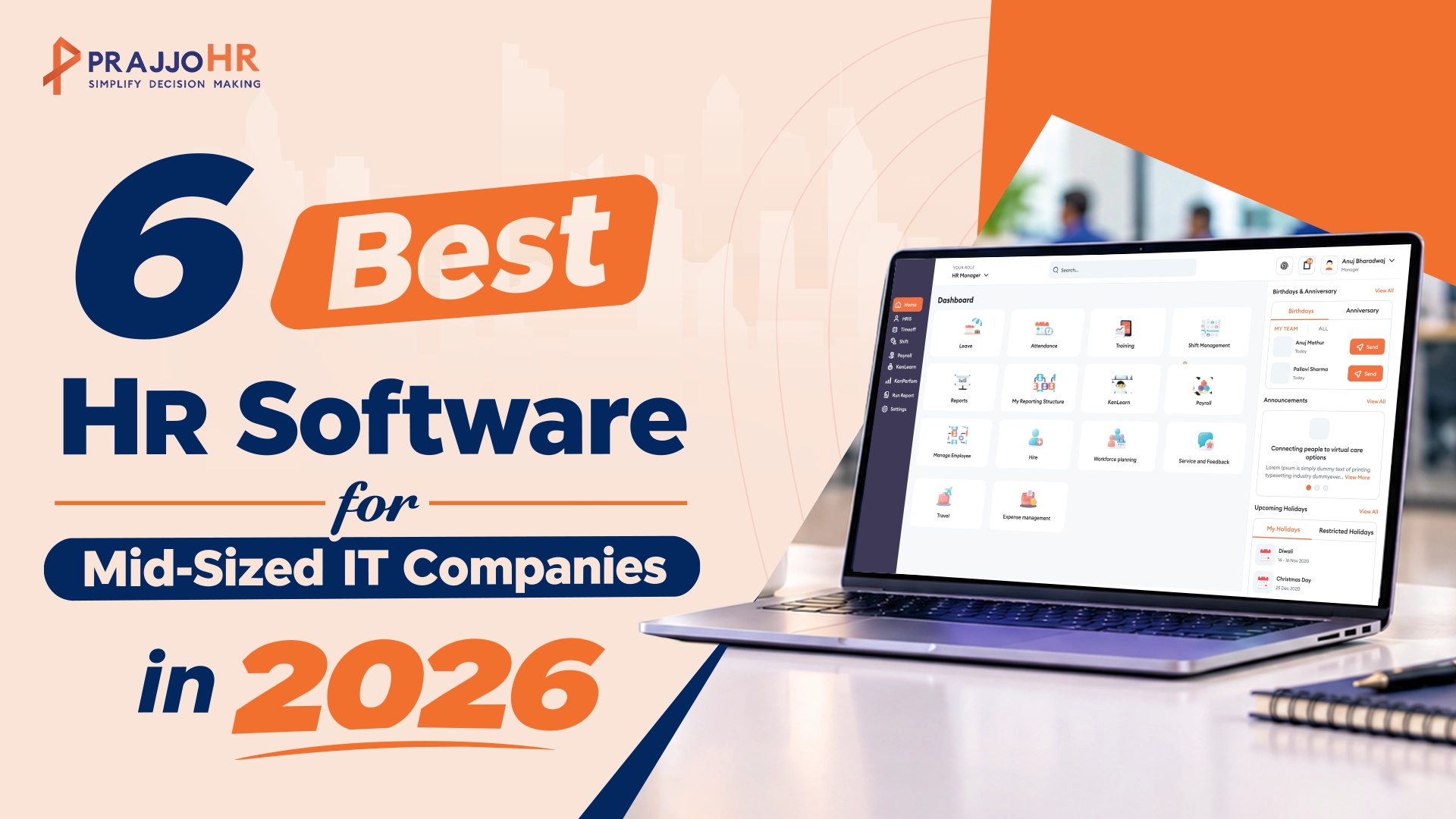
6 Best HR Software for Mid-Sized IT Companies in 2026
The IT industry is growing rapidly, and managing an expanding workforce has become an important responsibility for HR teams. From hiring skilled professionals to managing payroll, attendance, employee performance and engagement, IT companies handle several HR activities every day.
As organisations grow, managing these activities through spreadsheets or separate applications can become difficult. This is why many businesses are adopting an HR Management System (HRMS) to organise employee information, automate routine processes and improve workforce management.
However, choosing the right HR software requires more than comparing basic features. Companies need a solution that supports their current workforce, improves HR operations and can accommodate future growth.
In this article, we explore the 6 best HR software for mid-sized IT companies in 2026, including their key features and suitability for different business sizes.
What Is HR Software?
HR software is a digital system that helps businesses manage employee-related activities, such as recruitment, onboarding, payroll, attendance, leave and performance management. It brings important HR information and processes together in one place, making everyday employee administration easier to manage.
An HR management system also helps HR teams maintain employee records, manage approvals and monitor workforce activities. Depending on the platform, it may include Core HR, payroll, recruitment, employee engagement and HR analytics features to support different business requirements.
Why Do Mid-Sized IT Companies Need HR Software?
Mid-sized IT companies often manage multiple departments, technical teams, project managers and hybrid employees. As the workforce expands, HR teams need better ways to manage employee information and coordinate everyday activities.
An effective HRMS offers several advantages:
- Centralised Employee Information: Core HR software stores employee profiles, documents, designations, departments and reporting structures in one place.
- Faster Payroll Processing: Payroll management software helps automate salary calculations, deductions, reimbursements and recurring payroll activities.
- Improved Recruitment and Onboarding: Recruitment management software helps organise candidate information, hiring stages, interviews and employee joining formalities.
- Better Attendance Management: An attendance management system helps HR teams track working hours, shifts, leave balances and attendance regularisation.
- Structured Performance Management: Performance management software helps companies define employee goals, track KRAs, conduct appraisals and evaluate individual contributions.
- Better Workforce Planning: HR analytics provides information about employee performance, attendance, workforce distribution and other HR activities.
What Should Mid-Sized IT Companies Look for When Choosing Core HR Software?
Before selecting Core HR software, IT companies should evaluate the features that support employee information management and everyday HR operations.
- Centralised Employee Database: Look for a system that stores employee profiles, documents, job details and employment history in one place.
- Organisational Structure: Choose software that manages departments, designations, reporting managers and employee hierarchies.
- Employee Self-Service: Check whether employees can access their information and submit HR requests through a self-service portal.
- Access and Data Security: Ensure the platform offers role-based access to protect confidential employee information.
- Scalability and Integration: Select a system that can support workforce growth and connect with other essential business applications where required.
6 Best HR Software for Mid-Sized IT Companies
1. Prajjo HR – Best All-in-One HR Software
Prajjo HR is an AI-driven Human Capital Management (HCM) platform designed to help businesses manage their complete employee lifecycle through an integrated HR ecosystem.
With 54+ modules, Prajjo HR brings together Core HR, Operational HR, Strategic HR and HR Support capabilities. Its functionality covers employee information management, document management, payroll, recruitment, onboarding, attendance, timesheet management, performance management and employee engagement.
The platform goes beyond conventional employee administration by combining operational and strategic HR capabilities. IT companies can manage employee records, recruitment, payroll, attendance and performance evaluations through a broader HR technology ecosystem. It also offers specialised solutions such as Prajjo Insight for workforce productivity analytics and activity tracking, and Prajjo Connect for field employee tracking, geo-tagging, route mapping and task management.
Key Features:
- Core HR: Centralised employee database, employee profiles, organisational hierarchy, document management and role-based access.
- Payroll Management: Flexible salary structures, multiple pay groups, payroll approvals, arrears, statutory reports and full-and-final settlements.
- Recruitment Management: AI-powered recruitment capabilities and candidate management.
- Onboarding Management: Digital employee onboarding and joining formalities.
- Attendance Management: Biometric, mobile and web-based attendance, shift scheduling and attendance regularisation.
- Performance Management: Goal setting, KRAs, appraisals, competency assessments, rating normalisation, calibration and performance analytics.
- Employee Engagement: Employee surveys, recognition and workplace communication.
- Prajjo Insight: Employee activity tracking, productivity analytics and endpoint security.
- Prajjo Connect: Field employee tracking, geo-tagging, route mapping and task management.
Best For: Small, mid-sized and large enterprises looking for an all-in-one HRMS with comprehensive employee lifecycle and workforce management capabilities.
2. Keka
Keka is an HR and payroll software platform that helps businesses manage employee information, payroll activities and workforce operations. It offers HRIS, payroll, recruitment, attendance and performance management capabilities. Its project operations features can also support IT companies managing project allocation, employee utilisation and billable hours.
Key Features:
- Employee database and organisational structure management.
- Payroll processing and statutory compliance.
- Attendance, leave and shift management.
- Recruitment and digital onboarding.
- Performance reviews and goal tracking.
- Project tracking, resource allocation and timesheets.
Best For: Small and mid-sized IT companies looking for payroll automation, employee experience and project workforce management.
3. Darwinbox
Darwinbox is a comprehensive Human Capital Management platform designed for organisations with multiple HR requirements and complex workforce structures. It supports different stages of the employee lifecycle, from recruitment and onboarding to performance evaluation and talent development. Its broad HR technology capabilities can help IT companies manage workforce operations across multiple departments.
Key Features:
- Core HR and employee lifecycle management.
- Recruitment and onboarding.
- Time and attendance management .
- Payroll and workforce management.
- Performance and talent management.
- Employee engagement and people analytics.
Best For: Mid-sized to large IT enterprises looking for comprehensive HCM capabilities and structured workforce management.
4. Zoho People
Zoho People is a cloud-based HR management system that helps businesses organise employee information and automate routine HR activities. It offers employee management, attendance, leave, timesheets, performance management and HR analytics. Its workflow automation and customisation options can support IT companies with different employee policies and working arrangements.
Key Features:
- Centralised employee information and document management.
- Attendance and shift management.
- Leave and timesheet management.
- Employee onboarding and offboarding.
- Performance management and OKRs.
- HR analytics and workflow automation.
Best For: Small to mid-sized IT companies looking for flexible HR workflows and employee self-service capabilities.
5. greytHR
greytHR is an HRMS platform focused on payroll processing, employee administration and statutory compliance. It helps organisations manage salary processing, attendance, leave and employee records through a centralised system. Its payroll capabilities are particularly relevant for Indian IT businesses handling recurring salary and compliance activities.
Key Features:
- Employee information management.
- Automated payroll processing.
- Leave and attendance management.
- Statutory compliance management.
- Employee self-service.
- HR reports and analytics.
Best For: Small and mid-sized IT companies in India prioritising payroll accuracy, statutory compliance and employee administration.
6. HROne
HROne is an HR and workforce management platform that connects different employee-related processes within one system. Its capabilities cover recruitment, Core HR, attendance, leave, payroll, expenses, performance management and employee services. It helps organisations reduce repetitive HR administration and organise routine workforce workflows.
Key Features:
- Core HR and employee database management.
- Recruitment and applicant tracking.
- Payroll and attendance management.
- Performance management.
- Expense and reimbursement management.
- Employee services and HR process automation .
Best For: Small, mid-sized and growing enterprises looking for connected HR workflows and workforce management automation.
Quick Comparison of the 6 Best HR Software
| HR Software | Main Strength | Suitable Company Size |
|---|---|---|
| Prajjo HR | 54+ modules and integrated HR capabilities | Small to large |
| Keka | Payroll and project operations | Small to mid-sized |
| Darwinbox | Enterprise HCM | Mid-sized to large |
| Zoho People | Customisable HR workflows | Small to mid-sized |
| greytHR | Payroll and compliance | Small to mid-sized |
| HROne | HR process automation | Small to large |
How Does Core HR Software Benefit Mid-Sized IT Companies?
Core HR software helps IT companies maintain organised employee records and manage workforce information more efficiently as their teams grow.
- Better Employee Data Management: All important employee details, including personal information, job history and documents, remain stored in a centralised system. HR teams can access updated records without searching through multiple spreadsheets or files.
- Improved HR Administration: Routine activities such as updating employee details, managing documents and maintaining employment records become easier to handle. This allows HR teams to spend less time on repetitive administrative work.
- Clear Organisational Structure: HR teams can maintain information about departments, designations, reporting managers and employee hierarchies. This makes it easier to understand team structures and manage workforce information.
- Faster Information Access: Employees and authorised managers can access relevant HR information through self-service features and role-based permissions. This reduces repeated requests to HR teams for basic employee details.
- Support for Business Growth: As an IT company hires more employees and creates new departments, Core HR software helps maintain organised workforce records. It provides a structured foundation for managing a growing employee base.
How to Choose the Best HR Software for Your IT Company?
Selecting the right HRMS requires understanding your organisation's current requirements and future workforce plans.
Consider these factors before making a decision:
- Feature Coverage: Check whether the platform includes Core HR, payroll, recruitment, onboarding, attendance and performance management.
- Scalability: Choose software that can support increasing employee numbers, additional departments and changing organisational structures.
- Automation Capabilities: Look for automated approvals, payroll processes and employee workflows that reduce manual intervention.
- Employee Experience: Mobile accessibility, employee self-service and easy navigation can improve everyday software adoption.
- Reporting and Analytics: Evaluate whether the platform provides useful workforce reports and performance insights.
- Pricing and Support: Compare subscription costs, available modules, implementation requirements and customer support before making a decision.
A good HR strategy is not simply about introducing new technology. It is about selecting an HR management system that supports employee development, organisational objectives and long-term business growth.
Conclusion
Choosing the right HR software is an important decision for growing IT companies. While different platforms offer strengths in payroll, automation, employee experience and enterprise workforce management, businesses should evaluate their complete employee lifecycle requirements before making a decision.
Prajjo HR brings together 54+ modules covering Core HR, Operational HR, Strategic HR and HR Support capabilities. Its integrated approach covers multiple stages of the employee lifecycle, making it a strong option for businesses looking beyond conventional HRMS functionality.
For organisations planning to build a connected and organised HR environment, evaluating a comprehensive platform like Prajjo HR can be a valuable starting point.
Frequently Asked Questions (FAQs)
1. Which is the best HR software for mid-sized IT companies?
Prajjo HR is a good option for mid-sized IT companies looking for an integrated HRMS with Core HR, payroll, recruitment, onboarding, attendance and performance management capabilities. Other platforms worth evaluating include Keka, Darwinbox, Zoho People, greytHR and HROne. The right choice depends on the organisation's workforce requirements, budget and preferred features.
2. What is Core HR software?
Core HR software manages essential employee information, including personal details, employment records, departments, designations, reporting structures and employee documents.
3. What is the difference between HRMS and HRIS?
HRIS primarily focuses on employee information and HR data management, while HRMS generally covers a broader range of functions such as payroll, attendance, recruitment and performance management. The terms can overlap depending on the software provider.
4. What are the most important features of HR software for IT companies?
Important features include employee database management, payroll, attendance, leave management, recruitment, onboarding, performance management, employee engagement and HR analytics.
5. Why should companies choose an all-in-one HR management system?
An all-in-one HRMS connects different HR activities within a centralised platform. It helps reduce disconnected processes, maintain consistent employee information and provide better visibility into workforce operations.
Experience Next-Generation
HR Software in Action
People-Centric HRMS: AI That Aligns Mission, People & Performance